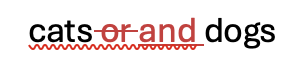
Once you know to turn on Track Changes in Word before you edit, you’re ready to start refining their use. These refinements will make it easier for everyone involved to see what changes were made and to accept those suggestions with a minimum of effort.
Continue reading Don’t Do That! Track Changes EditionAll posts by Adrienne Montgomerie

How to Find ChatGPT Links & Delete Them From a Word File
Though the “naked URL” in a file might look simple and direct, the link coded to that might contain details you don’t want readers to see. Like, for example, that readers could see that the source of the link was ChatGPT. (The concern with that is explained at the end.)
What an LLM-generated link looks like
In the file, the link may be linked words within a sentence (as those words are themselves) or a “naked URL” like this: https://www.canada.ca/en/health-canada/services/pest-control-tips.html.
Continue reading How to Find ChatGPT Links & Delete Them From a Word File
Editing Graphs and Charts
Because of the time required to alter graphs and charts, these are best checked earlier on than the copyediting stage. Since that rarely happens, proofreaders, especially, should put graphs and all illustrations through a thorough quality check.
Continue reading Editing Graphs and Charts
Q&A: What Styles Are in Use?
QHow can I see what Styles are in use in a Word document?
AFair question! Look below to see two was to find this information for Windows and Mac environments.
Continue reading Q&A: What Styles Are in Use?
Stop Word from Scraping Your Content to Train its AI
Word is turning on AI by default and claims the right to use your “data” to train it. If you have an NDA or other contractual or ethical need to protect the content in the files you are working on, turn off Connected Experiences. If you don’t see this option right now, check back frequently until you do; features are rolled out to users over time.
What are “Connected experiences”
Continue reading Stop Word from Scraping Your Content to Train its AI
What Words Word Counts (compared to other software)
Word counts matter for estimating the finished length of a book, whether an article will fit in the layout, and how much time (and money) we’ll need for editing and design and other production steps. But not all words are counted equally, and even more so, perhaps lengthy words like sesquipedalian or phosphofructokinase should be counted as more than equivalent to cat or it. Such words can make technical texts considerably longer than an equivalent number of words in a novel.
What Is a Word
Continue reading What Words Word Counts (compared to other software)
Mac’s new Find in Document Pop-up for Word

Typing cmd + F now opens this Find in Document pop-up in MS Word for Mac. The pop-up works much the same way as this simple find always did. And clicking the kabob menu to the right of the Search field opens the drop-down menu shown, where you can launch the Replace window or the Search pane (sidebar) to see a list of matches for the searched characters.
Search field update!
Continue reading Mac’s new Find in Document Pop-up for Word
Q&A: Fixing lists in bulk?
QJust a few chapters in this book I’m editing have used a 1)a)i) structure for nested lists. Is there an easier way to make them match the other •o– lists without restyling them line by line?!
AYes! It involves the multilevel list button on the Home ribbon and (at best) Styles for each level in the list.
Continue reading Q&A: Fixing lists in bulk?
Insert Ribbon Review: Tables Button

The Tables group (item?) on the Insert ribbon is where to both insert a table and where to turn tabbed content into a table without the need to retype or drag and drop.
Continue reading Insert Ribbon Review: Tables Button
How Much Did the Manuscript Change?
In a recent proofread, authors told me that they made “a few additional changes” as they uploaded content to the ebook system.
“OK,” I thought, “there’s always a few lingering typos, and looking at it in a new way (as happens when uploading) can reveal them.”
Continue reading How Much Did the Manuscript Change?