
Once you know to turn on Track Changes in Word before you edit, you’re ready to start refining their use. These refinements will make it easier for everyone involved to see what changes were made and to accept those suggestions with a minimum of effort.
Continue reading Don’t Do That! Track Changes EditionTag Archives: best practices

Editing Graphs and Charts
Because of the time required to alter graphs and charts, these are best checked earlier on than the copyediting stage. Since that rarely happens, proofreaders, especially, should put graphs and all illustrations through a thorough quality check.
Continue reading Editing Graphs and Charts
Q&A: Fixing lists in bulk?
QJust a few chapters in this book I’m editing have used a 1)a)i) structure for nested lists. Is there an easier way to make them match the other •o– lists without restyling them line by line?!
AYes! It involves the multilevel list button on the Home ribbon and (at best) Styles for each level in the list.
Continue reading Q&A: Fixing lists in bulk?
Reduce Word File Size
Word files get bloated because they’re long, have big/many photos, and because they store a whole lot of data about changes that have been made. These are several ways to reduce the bloat. Use them independently or in any combination for maximum results!
Continue reading Reduce Word File Size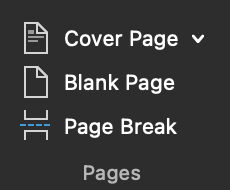
Insert Ribbon Review: Pages Group

The Pages group* on the Insert ribbon is where to turn to instead of repeatedly hitting enter to start a new page. And it does more! Below you’ll find a roundup of posts explaining the best practices for using breaks specifically in an editorial production workflow. These posts build on top of the explanations and guides found in the multimedia guide to Editing In Word 365.
Continue reading Insert Ribbon Review: Pages Group
Home Ribbon Review: Styles Group
Styles is the Home ribbon group where some of Word’s mightiest power lies. Applying Styles is easy, but the tools they unlock are some of the best in Word. Below you’ll find a roundup of posts explaining the best practices for using Styles specifically in an editorial production workflow. These posts build on top of the explanations and guides found in the multimedia guide to Editing In Word 365.
Continue reading Home Ribbon Review: Styles Group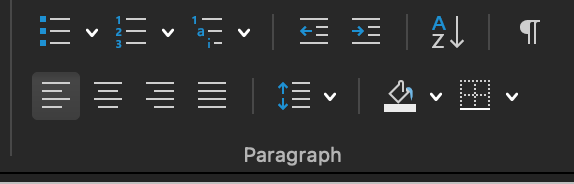
Home Ribbon Review: Paragraph Group
Rounding up posts on the third grouping on the Home ribbon includes one of the most powerful tools: the pilcrow button. Below you’ll find a roundup of posts relating to this grouping in Word’s ribbon, explaining the best practices of using those tools specifically in an editorial production workflow. These posts build on top of the explanations and guides found in the multimedia guide to Editing In Word 365.
Continue reading Home Ribbon Review: Paragraph Group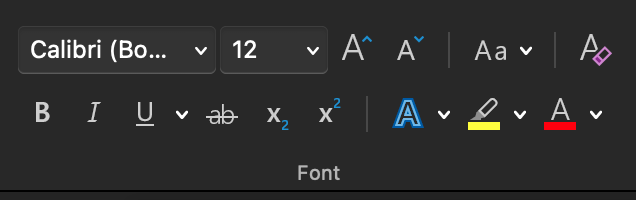
Home Ribbon Review: Font Group
Moving to the second grouping on the Home ribbon, we continue our roundup of posts relating to each part of Word’s ribbons, explaining the best practices of using them specifically in an editorial production workflow. These posts build on top of the explanations and guides found in the multimedia guide to Editing In Word 365.
Continue reading Home Ribbon Review: Font Group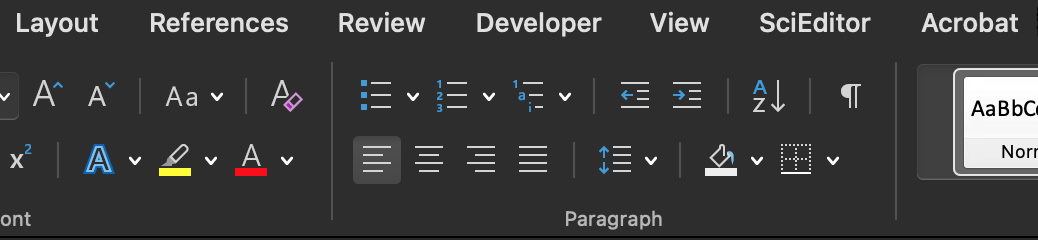
Home Ribbon Review: Clipboard Group
Here we begin our roundup of posts relating to each part of Word’s ribbons, explaining the best practices of using them in specifically in an editorial production workflow. These posts build on top of the explanations and guides found in the multimedia guide to Editing in Word 365.
Continue reading Home Ribbon Review: Clipboard Group
Q&A: Tracked Changes are hard to look at. Can’t we use something else?
QI find it hard to look at tracked changes; can editors use another method?
AIt’s an interesting question, and one that gives me feels, it seems. TL;DR — No! Don’t make other professionals put up with awkward kludges to assuage some initial discomfort. You get used to it, and let me share some better ways to ease the pain.