Need to make a global change on just one section of text? Perhaps a lengthy quote pasted in ended up with hard returns at the end of each line, for example.
You’ll need to select the text you want to apply the change to, then use the Advanced Find and Replace tool. There’s no way to limit what text a change is applied to in the simple Find and Replace panel that pops up on the left of the MS Word screen.
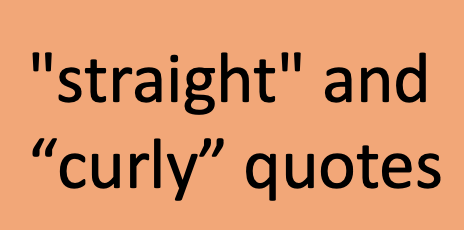
Curly quotation marks curve or slant inward toward the content they bracket. (The font or typeface choice determines how they look, precisely.) Straight quotation marks are… straight. Word can do either, but you have to set your preference.
The pilcrow has marked the end of a paragraph since long before there were computers. The little backwards ¶ today is found hiding in documents, storing vital format information, and marking paragraph breaks.
Click the little pilcrow (¶) on Word’s Home ribbon to see all the behind-the-scenes formatting marks that make documents look good. But what are those marks? See the table for a list.
Word used to number comments automatically; you could see those numbers in the comment balloons at the right. Those numbers were handy because they aided cross-referencing and let us refer to specific comments in transmittal memos and other discussions.
Word still numbers comments, but those numbers don’t appear in the balloons in the markup area. Here are three ways to see them: in the Review pane, in Draft view, and by printing a list of markup.
There are at least two reasons you might want to have a “print” copy of the tracked changes and comments in a Word document: to distribute hard copy, or to extract the information into a memo or other use. Print is in scare quotes because this method can produce a PDF just as easily as a paper copy.
By changing the style settings of Comment text, you can make the text size bigger, make the lines double spaced, change the font, its colour, or any other attribute.
In contrast to last week’s post, there are times when you may want to reject all changes by just one reviewer. Perhaps they misunderstood the brief, or used the wrong style guide. Or perhaps they’re the dreaded “Reviewer 2.” No matter what reason you’ve got, ditching their suggestions is easy. It takes only a few clicks. Hooray!
When collaborating on a Word file, sometimes we want to (or must) accept all of one person’s suggested changes. Maybe they’re the big boss. Maybe they set all the styles in the document. Maybe, they’re the safety reviewer and their changes are essential to make sure no readers blow up; at least not because of this file.
Rather than clicking through each change, figuring out who made it, then clicking either Accept or Next, use this efficient method:
In the editing process, a “clean” file means it’s a manuscript ready for layout. All changes have been accepted, all comments removed, and the editing work is done. Or, maybe the file is nearly ready for layout and the team wants a version that could be ready if it suddenly must be submitted.
Good news! It just takes a couple of clicks to clean the document of all tracked changes and comments.